Monday, 20 February 2012

The Commissions: Task 2 - Research for Martin Wilby


Our second Commission task was to research other student idea. I was paired with Martin Wilby. We confirmed each other's ideas and Martin was interested in military environment, as bunkers and forts.
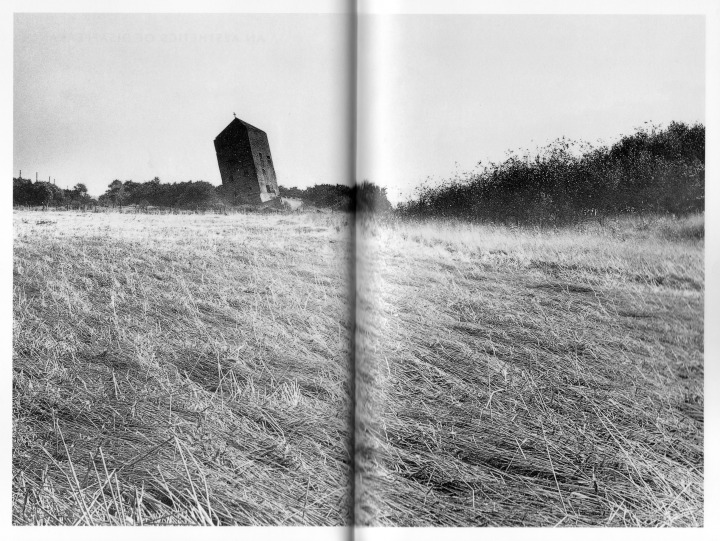
First I did research at Paul Virilio (born 1932 in Paris, France). He is a cultural theorist and urbanist. He is best known for his writings about technology as it has developed in relation to speed and power, with diverse references to architecture, the arts, the city and the military. In 1958, Virilio conducted a phenomenological inquiry into military space and the organization of territory, particularly concerning the Atlantic Wall—the 15,000 Nazi bunkers built during World War II along the coastline of France and designed to repel any Allied assault. Paul Virilio's classic book of wartime architectural history –“Bunker Archeology”, you can find in Canterbury or Maidstone UCA Library, or UCA Virtual library. Some images from this book:


Chilling beauty of the "WWII Bunkers" photo series by English photography Jonathan Andrew. His treatment of these stunningly functionalist concrete structures—that appear as is from another world—are a poignant reminder of the scars left by war. He used huge light sources to illuminate these concrete structures. 


I think Erasmus Schroter and his astonishing book “Bunker” inspired Jonathan Andrew. You can find this book in our UCA Rochester library. German photographer refers to the colours he uses to appropriately show off the bunkers and bastions of the beaten “Fortress Europe” - or, more precisely, its relics - as "obscene colors". 


Photographer Alex Fradkin captured the architecture of war along the coast of the San Francisco Bay area in the book Bunkers: Ruins of War in a New American Landscape. The earliest bunkers date from the Mexican–American War all the way up to the Cold War, these bunkers were built in anticipation of an enemy who never arrived. 


Our project can take only in Medway area.
www.undergroundkent.co.uk/ - is a site dedicated to the many underground features that can be found not just in Kent but also in other areas.  They are mostly military fortifications that have been built over the last three centuries, but other features that included tunnels can also be found here.  All sites are man made, or in the case of mines, heavily influenced by industrial usage.  The aim is to provide a glimpse into the rarely seen and often ignored world that exists beneath our feet.
Using this site I create the list of military or weird unusable buildings in Medway area:


Saturday, 18 February 2012

Workshop: Metz/MF - Specificity of Interior Lighting


Workshop starts from talks about shutter types. DSLR cameras had Focal Plane shutters and film cameras –Leaf shutters. Especially this workshop we’re were working with film cameras. In the presentation some photographer’s were introduced: Adam Amengual, Philip Dicorsia, Kate Peters, Kiran Master and ect. We analyzed their works where they were using fill in flash. 
Working in groups we got a task:
  • ·      Make set of portraits in a interior space
  •     Combine available-light with the Metz flash. Fill-in technique
  • ·      With Manual settings; Crete images with different ratios: -2 and -3 stops. (Combine with ambient light)
  • ·      Bounced and diffused technique should be used (Spun and Neutral Density gel)
  • ·      Two frames on Auto settings


 Jonathan demonstrated technique shots. We had 3-4hrs to complete our tasks and return to studio with contact sheets.
My contact sheet and one scanned picture:


Farah’s and Dana’s contact sheet:

Received knowledge:
  • ·      Shutter speed dictates background light (ambient)
  • ·      The power of flash dictates subject brightness
  • ·      The aperture effects everything: overall brightness of the image
  • ·      Move the subject from the background
  • ·      Taking readings with flash meter from subject – always flash mode shutter speed should be set on 1/500
Ratio types:
1:1=0 F-Stop
2:1=1 F-Stop
3:1=1.5 F-Stop
4:1=2 F-Stop

Sunday, 12 February 2012

Time Machine: Task 1 - Compare and Contrast two Paintings


The Sleeping Venus, also known as the Dresden Venus, is a painting by the Italian Renaissance master Giorgione, with, it is now generally accepted, the landscape and sky, by Titian, completed after Giorgione's death in 1510. The painting, one of the last works by Giorgione, portrays a nude woman whose profile seems to follow that of the hills in the background. Giorgione put a great deal of effort into painting the background details and shadows. The choice of a nude woman marked a revolution in art, and is considered by some authorities one of the starting points of modern art. Underlying erotic implications are made by Venus's raised arm and the placement of her left hand on her groin. The sheets are painted in silver, being a cold color rather than the more commonly used warm tones for linens, and they are rigid looking in comparison to those depicted in similar paintings by Titian or Velázquez. The landscape mimics the curves of the woman's body and this, in turn, relates the human body back to being a natural, organic object. 

Olympia is oil on canvas painting by Édouard Manet, painted in 1863. Titian’s Venus of Urbino inspired the painting. Olympia is a painting of a reclining nude woman, attended by a maid and a black cat, gazing mysteriously at the viewer. The objections to Olympia had more to do with the realism of the subject matter than the fact that the model was nude. In the painting, the maid offers the courtesan a bouquet of flowers, presumably a gift from a client, not the sort of scene previously depicted in the art of the era. What shocked contemporary audiences was not Olympia's nudity, nor even the presence of her fully clothed maid, but her confrontational gaze and a number of details identifying her as a demi-mondaine or courtesan. These include the orchid in her hair, her bracelet, pearl earrings and the oriental shawl on which she lies, symbols of wealth and sensuality. The black ribbon around her neck, in stark contrast with her pale flesh, and her cast-off slipper underline the voluptuous atmosphere

Wednesday, 8 February 2012

Seminar 1 Task - "The Commission - The Portrait Issue"

Finlay MacKay, "Changing Pace, David Weir" for "The Road to 2012"

Born and raised in Scotland, Finlay MacKay studied photography at the Glasgow School of Art before moving to London in 1998. Finlay began working professionally in 2003. His first photographs revealed a highly original style, drawing upon dynamic action, group portraiture, street art, and illustration, as well as classical forms of painting. His imagination, technical knowledge and lighting skill have led to Finlay's recognition as one of new generation of elite photographers working today.
Finlay has photographed some of today's top athletes, entertainers and celebrities.
For the National Portrait Gallery/BT Road to 2012 Project MacKay has moved away from traditional sports approach. By observing and responding to the narratives that the athletes and their training locations present, he has created a series of contemplative scenarios to tell a story of the London 2012 Olympic and Paralympic Games from singular perspective.
In this image like most of them from this series - objects are centralized. Also all the athletes are dominant in their natural environment: training places. Big depth of field opens to spectators to feel their environment power. Splay road gives speed sense. Photographer using flashes in his most photographs in this series. Camera position usually same, sometimes tilts up.

 Toby Glanville, "Actual Life", 2002

Book of photographs by Toby Glanville taken over three years and starting from two Kent villages, Westerham and Goudhurst. The title, Actual Life, suggests that there is a polemic concealed behind the gentle face of these pictures (the majority of which are portraits). There are many pictures of people over 60 or younger than 20 but not very much in between. Alongside these pictures are a number of photographs taken in schools, giving small institutional details of the kitchens and dining halls. They suggest order, a well bedded down security and will provoke a faint nostalgia for departed youth on the part of anyone who attended such a school. In both his documenting of a particular area and in the manner in which he has photographed people living a life that seems as yet untouched by mobile phones and computers, Glanville is like a latter day Emerson capturing a world soon to disappear - or which has already gone.
Similar to MacKay’s picture this is a portrait in their working environment. Object centralized as well. Lighting is natural here – as most of them in this series. One of dissimilarity between MacKay and Glanville is that Glanville using a natural light in their pictures. However similarity is that environment fills a big part of the pictures. In Glanville’s Actual life series are not only portraits. There is and environment pictures where these people are.

Ulrich Gebert, "Freischneider", 2004

German conceptual photographer Ulrich Gebert was born in Munich and lives and works in Munich and Leipzig. He received his Masters in Photography at Royal College of Art, London, and studied at the Glasgow School of Art and with Timm Rautert at the Academy of Visual Arts in Leipzig. He studied in same Art school as MacKay. Ulrich Gebert is interested in principles of ordering: what do they mean, what are the consequential problems of ordering systems? In Ulrich Gebert‘s photography work, nature – explicitly the botanical – as raw material for the human being who, incidentally, likes to maintain order comprises but just the outer layer of the analysis of the relationship between human being, shrubbery and patterns of order. In addition to pictures of vegetation, tamed and cut into form, „Freischneider“ (hedge cutter) also portraits the men who carry the blades.
Gebert interested more in nature: trees, woods etc. By this particular portrait artist’s concept is how humans cut vegetation into unnatural shapes. In this series more pictures are with trees and nature and only one close-up portrait of a man with blades. In my opinion Gebert’s portrait had least similarities with other two task pictures.