Sunday, 25 March 2012

the Commission – Idea developing and research after Commission Tutorial


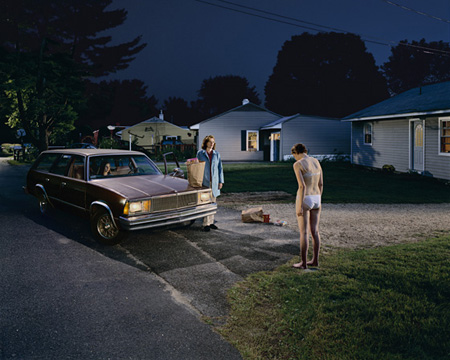
Tutorial really helped me. Understood what mistakes I did. My idea was to reveal pollution problem in our lives - what we can see in our future. People will do daily normal things, but they will protect themselves with a masks or costumes. In my first trip I was shooting in black and white film. But I was impelled by Steffi Klenz to shoot it in colour film. As well I looked to recommended photographers. Charlie White – who done images with weird aliens. But they were involved in normal human lives. Looked to Gregory Crewdson photography’s to understand great lighting techniques. 
Charlie White:


Gregory Crewdson:


The Commission – Waste and Pollution


Air pollution is the introduction of chemicals, particulate matter, or biological materials that cause harm or discomfort to humans or other living organisms, or cause damage to the natural environment or built environment, into the atmosphere.
Our world’s population is exploding. Throughout history, our populations has grown slowly but since modern medicine has stopped many deaths from disease and modern farming methods mean more food is available, death rates in underdeveloped countries are much lower than birth rates.
This increase in population, together with increasing living standards, puts more demands on our environment, meaning more raw materials (including non-renewables) are used up. More waste is being produced and unless it’s handled properly will only cause more pollution.
Pollution means substances introduced by humans (either directly or indirectly), that results in harm to living resources, marine life, hazards to human health, hinders marine activities or spoils the quality for use of water. Human activity can pollute all these parts of the environment.
• Water – by sewage, fertilizers and toxic chemicals.
• Land – by pesticides and other toxic chemicals (which can be washed from land to water).
• Air – by smoke and gases (such as sulphur dioxide).

Sunday, 18 March 2012

Time Machine: Essay Research

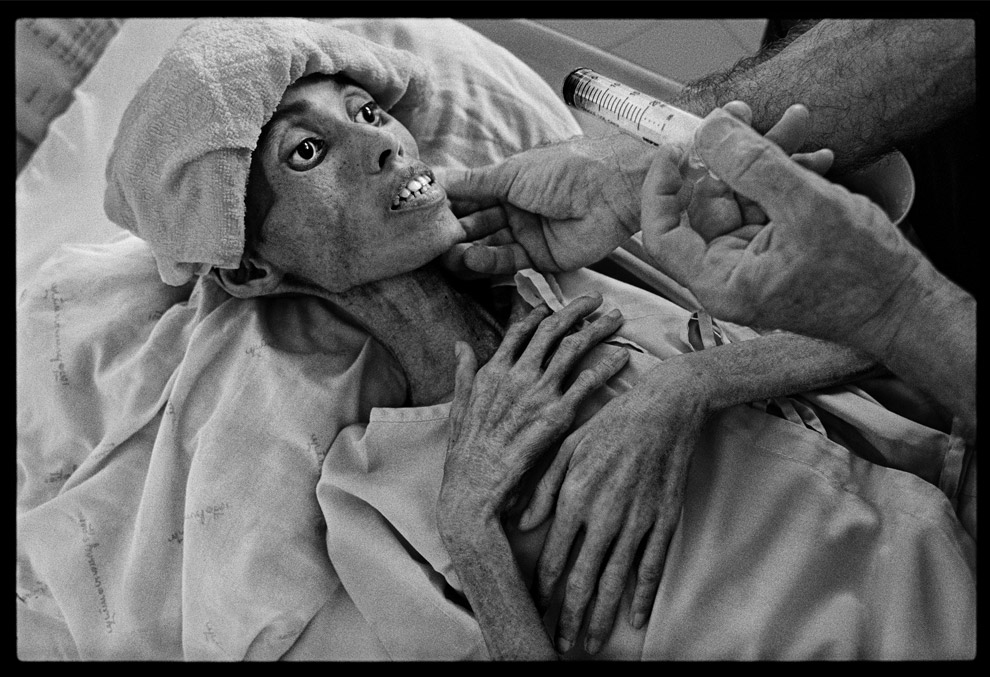
For my Time Machine essay research I decided to stop with photographer James Nachtwey. I really was touched by his photographs. Specially by his series from Africa, about AIDS, Tuberculosis and HIV diseases .


James Nachtwey (born March 14, 1948) is an American photojournalist and war photographer.  He was trying to bring these stories to the light and to show for the world what is important and underreported. Nachtwey's wish was that he could break this story, and demonstrate proof of the power of news photography in the digital age. 
My questions for analysis:
Why Nachtwey's so interested in it? - research about his past.
Why these diseases so prevalent in Africa? - need to investigate their culture and history.


Expected Literature:

Globalizing AIDS

Patton, Cindy, 1956-2002

Virtual Library

AIDS in Africa
Essex, Myron.
2002

Virtual Library

AIDS and its metaphors.
Sontag, Susan.
1988

Rochester Library


Tuesday, 28 February 2012

Workshop: Colour Photogram

Today we had a photogram workshop in colour darkroom. It was interesting new experience and good fun. A photogram description in wikipedia - "A photogram is a photographic image made without a camera by placing objects directly onto the surface of a light-sensitive material such as photographic paper and then exposing it to light. The usual result is a negative shadow image that shows variations in tone that depends upon the transparency of the objects used. Areas of the paper that have received no light appear white; those exposed through transparent or semi-transparent objects appear grey."
Everyone brings different material or texture items and were creating they own imagination image with them. Playing with colours and various densities objects. There are some my works:


Sunday, 26 February 2012

Fashion: Constructed image - pine furniture list/prices

Chests of drawers:


Ikea - 15.99£


Wall Shelves:


Ikea - 1.69£


Ikea - 9.99£


Bedside tables:
In Argos prices starts from 15£
Link: http://www.argos.co.uk/static/Browse/ID72/14418006/c_1/1|category_root|Home+and+furniture|14417894/c_2/2|14417894|Bedroom+furniture|14418001/c_3/3|cat_14418001|Bedside+cabinets|14418006.htm


Ikea - 8.99£


Ikea - 35£


Hooks:


Ikea - 5.99£


Wardrobes:
Argos - prices starts from 40-50£
Link: http://www.argos.co.uk/static/Browse/ID72/14418004/c_1/1|category_root|Home+and+furniture|14417894/c_2/2|14417894|Bedroom+furniture|14418001/c_3/3|cat_14418001|Wardrobes|14418004.htm

On Ebay can find used wardrobes from 10£. But most of them: pick up only.

Need to check charity shops and second hand furniture stores.

Fashion: Constructed image - lights list/prices

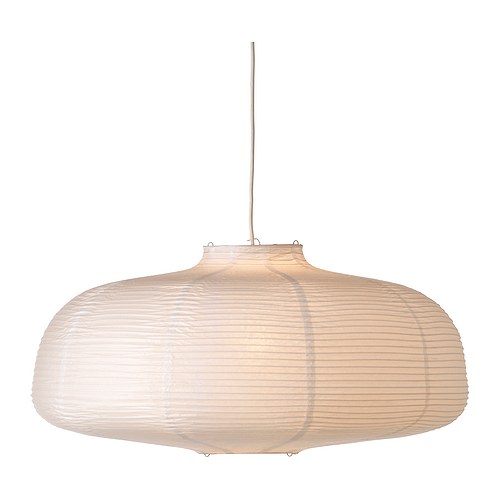
Ceiling lights:


Ikea - 13.99£


Ikea - 7.19£


Ebay - 24.89£


Ikea - 10.99£


Ikea - 13.99£


Ebay -19.49£


Ikea - 3.49£


Ikea - 8.99£


Ikea - 5.99£


Table lamps and floor lamps


Ikea - 6.99£


Ebay - 9.90£


Ikea - 11.99£


Ikea - 5.19£ (Have own)


Ikea - 9.99£


Ikea - 2.69£


Ikea - 7.99£


Ikea - 15.99£

Fashion: Constructed image - Studio Health & Safety and Risk Assessment


We will be allocated a working space within the studios and it is our responsibility to maintain space in health and safety. Done a list of possible emergencies and hazards in the studio:

Emergency arrangements
  • Fire evacuation - Familiarize yourself with the evacuation routes from your studio before you need to use them. Always keep the exits clear. Check out the nearest fire alarm bell to your space and in the event of firebreak the glass.
  • Accidents, Incidents - Any accident incident or near miss should be reported immediately to the tutor or technical staff in the area.


Hazards
  • Electrical equipment – extension cables must be secured and kept away from walkways. University equipment should be checked for safety on an annual basis. 
  •  Light - Flashlight is very strong and can damage the eyes; photographers, helpers & models should avoid unnecessary exposure to flash photography.
  • Heat - The flashlights become incredibly hot and could cause severe burns. They should never be handled without safety gloves.
  • Darkness - the low light in the studio presents a hazard in itself. Various props, wires, camera stands are less evident in the dark. When using the studio users should not rely on their usual senses. Extra attention needs to be paid, taking an extra look around before making movements, taking notice of where things are.
  • Tripping - Camera Stand, Props, Tri-pods. Ensure the lights/fittings are secure on the stands and that there is sufficient space for everyone to move around without a tripping/collision hazard.
  • Chemicals, solvents and aerosols
- Chemicals solvents and aerosols not purchased by the Faculty present unknown hazards. Please seek permission from the tutor and undertake an assessment with the tutor before bringing any chemicals solvents or aerosols to the studio.
  • Bumps - Hanging Lights, Soft Boxes
  • Manual Handling - Movement of props.
  • Working at Height - dependent on the props used.

General
  • Never leave the studio unattended.
  •  Housekeeping - Reducing slips, trips and falls.
  • Eating and Drinking and smoking - are forbidden in all workshops and studios in the Faculty. 
Risk assessment I will create when we decide with a group what props exactly we will use on set build. Risk assessment description:
Risk assessment is a step in a risk management procedure. Risk assessment is the determination of quantitative or qualitative value of risk related to a concrete situation and a recognized threat (also called hazard). Quantitative risk assessment requires calculations of two components of risk (R):, the magnitude of the potential loss (L), and the probability (p) that the loss will occur. In all types of engineering of complex systems sophisticated risk assessments are often made within Safety engineering and Reliability engineering when it concerns threats to life, environment or machine functioning. The nuclear, aerospace, oil, rail and military industries have a long history of dealing with risk assessment. Also, medical, hospital, and food industries control risks and perform risk assessments on a continual basis. Methods for assessment of risk may differ between industries and whether it pertains to general financial decisions or environmental, ecological, or public health risk assessment.